

Current location: home page > Products > Buried composite pipe for gas stations
Brief description:The three tests to be conducted after the construction of composite pipes are static conductivity, strength, and tightness. This article provides the medium, pressure, holding time, and qualification criteria for each test.
 News
What are the three tests to be conducted after the construction of composite pipes? Direct answer: Conducting static electricity test, only for the main pipeline, to verify the static electricity discharge ability of the conductive layer; Strength testing is conducted on both the inner and outer layers, with a pressure of five atmospheres and a holding time of thirty minutes; Tightness test, covering both the inner and outer layers, holding at one atmosphere for 60 minutes, and checking all connections with soap solution. Only when all three items are qualified can the pipeline be considered as passing the construction acceptance. In terms of sequence, static electricity leads to pressure, and any item that does not meet the standard shall not enter the backfilling process.
This only applies to the main pipeline. The conductive layer of the composite pipe is responsible for dissipating the static electricity generated by liquid flow. When it fails, it will accumulate charges in the pipe section, which is a clear hidden danger for oil storage and transportation. The test verifies the continuity of the conductive layer to see if the resistance value is within the required range. The testing points are selected at both ends of the pipe section, and the results are recorded in the acceptance record. Damage to the conductive layer during construction - such as excessive heating, improper cutting, and inadequate handling of connections - will all be exposed in this area.
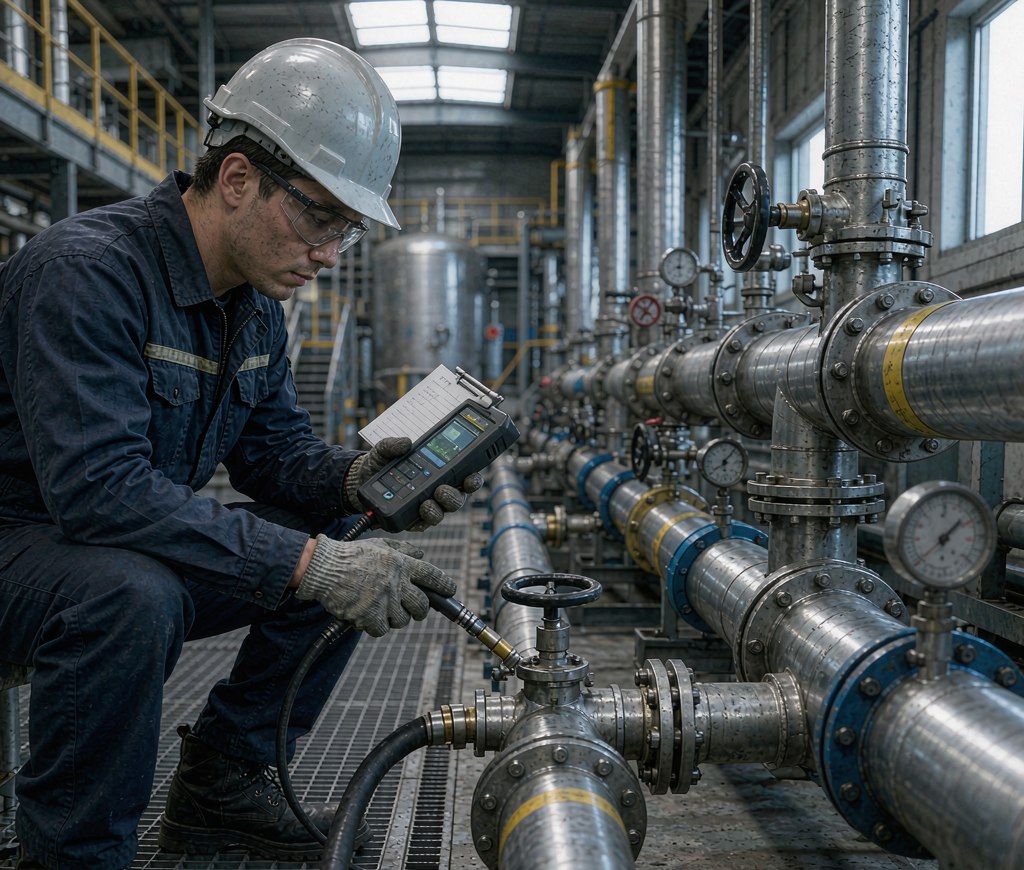
| test item | scope | Media and pressure | holding time | criterion |
|---|---|---|---|---|
| Static electricity test | Only the main pipeline | resistance measurement | Real time reading | Resistance meets the standard |
| Strength Test | Inner layer and outer layer | Five atmospheres of air or nitrogen pressure | thirty minutes | The pressure drop is within the allowable range |
| Rigorous Testing | Inner layer and outer layer | Air or nitrogen at one atmosphere pressure | Sixty minutes | No leakage, no bubbles in soap solution |
| Connection inspection | All connectors | Soap solution | Accompanied by pressure | No bubbles generated |
Both are pressure tests, using dry air or nitrogen as the medium, with differences in pressure and holding time. The strength test pressure is high and the time is short, holding at five atmospheres for thirty minutes, testing the pressure bearing capacity of the pipe and joint; The tightness test pressure is low and the time is long, holding at one atmosphere for 60 minutes, testing the sealing performance of the system. Both items must cover the inner and outer tubes - any failure of either layer in the double-layer structure is an accident. During the pressure holding period, if the pressure drops beyond the limit, use soap solution to check all connections, and the bubble point is the leakage point.
The pressure should be gradually increased in stages, with each stage stabilizing for a moment before increasing again to avoid pressure shock. During the testing period, personnel are not allowed to stand facing the ports and connections. If leakage is found, release the pressure first and then deal with it. It is strictly prohibited to tighten under pressure - operating under pressure is not only a safety issue, but also can cause the seal to deteriorate the tighter it is tightened.
It is common to simplify the three tests for pressure testing of composite pipes into one - only performing pressure testing without conducting static electricity, which brings the hidden dangers of the conductive layer into operation. Insufficient holding time is the second type - from thirty minutes to ten minutes, slow leakage cannot be detected. The soap solution inspection process is the third type - only visible joints are inspected, regardless of the buried layer and ports. Not all test records are of the fourth type - data is verbally reported, but there is no evidence to trace back afterwards. Acceptance is the cheapest link in the entire lifecycle of a pipeline, and saving it is the least cost-effective.
Select the medium according to the design documents for pressure testing, and gradually increase the pressure for gas testing in stages; The specific medium and parameters shall be subject to the design documents and product installation manual.
Release pressure before handling, and it is strictly prohibited to tighten under pressure; Find the leakage point, replace the seal or remake the joint, and then go through the complete testing process again after treatment.
I need it. The three test data are the core evidence of acceptance, which are archived together with the concealed engineering records, and subsequent maintenance and traceability rely on them.
This article is organized by Luoyang wohong petrochemical equipment co., ltd. the company provides design, manufacture, installation, commissioning and operation and maintenance services for oil and gas recovery equipment, solvent recovery devices and buried composite pipe networks at gas stations, oil depots and chemical enterprises. if you need scheme configuration or on-site investigation, please contact and exchange.
 Previous articleWhy should composite pipes be left for half an hour before electric fusion welding? Temperature adaptation and welding quality
 Company Name:
Luoyang Wohong Petrochemical Equipment Co., Ltd
 Hotline:
13526990215
 Company Address:
W2-1, Dongda Technology Industrial Park, Luoxin Industrial Cluster, Xin'an County, Luoyang City
 E-mail
lixiang@vohonoilpipe.com

Scan to follow us
Luoyang Wohong Petrochemical Equipment Co., Ltd Powered by EyouCms Henan ICP Registration No. 17014668-11 sitemap.xml
 Product Category