

How to recycle organic solvents after liquefaction? Purity, Storage, and Ledger Key Points
Release time: November 3, 2026
View count:
How to recycle organic solvents after liquefaction? Direct answer: The first three things for reuse are testing purity and impurities, storing according to grade and quality, and establishing a closed-loop ledger. Only when the purity is sufficient and impurities are controlled can they be mixed back or used as raw materials. Mixing storage and mixing can lower the quality of the entire batch and even cause safety issues. The judgment criteria are based on the matching of the detection data of the recycled liquid with its destination, rather than simply pouring it back into the production line after it is collected. This article explains the key points of detection, storage, and ledger before reuse. Many companies take back recycled liquid but dare not use it, fundamentally due to the failure to keep up with the testing and ledger. This article explains this closed-loop system, allowing recycled liquid to truly return to the production line instead of being piled up in tanks.
Purity testing before reuse
Recycling liquid is not equivalent to new material: it may contain moisture, light and heavy components, oil mist or dust carried in the front section. Before reuse, determine the testing items according to the purpose - purity, moisture, acid value, color, insoluble matter, corresponding to different grades. The detection caliber is the lower limit of the benchmark reuse standard, not judged by appearance; The indicators of recycled liquid from different batches on the same line may fluctuate, and testing each batch is more stable than sampling, avoiding one batch deteriorating and dragging down the entire tank.
The principle of differentiated storage
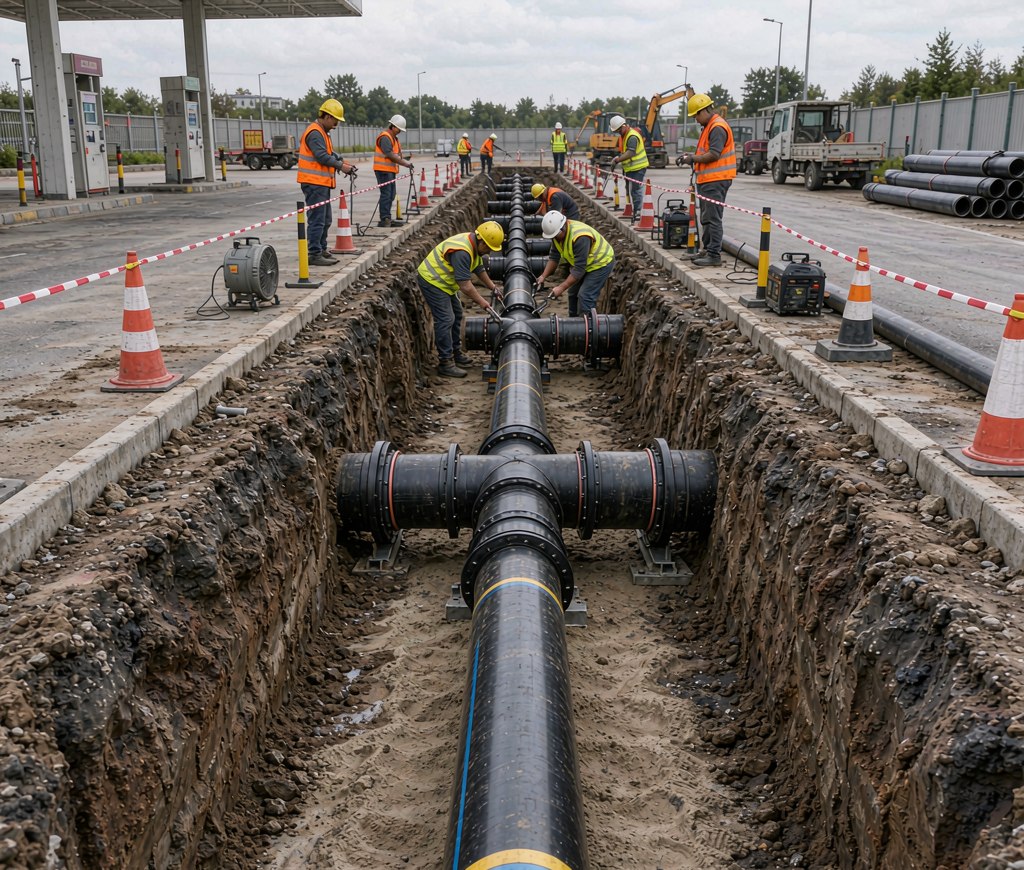
Separate storage of recycled liquids with different solvents and purities is a prerequisite for stable reuse quality. Mixing storage can cause high-grade products to be lowered by low-grade products, and mixing different solvents may result in unexpected compatibility issues. Storage is divided into tanks according to grade, with clear labeling, and reuse channels corresponding to specific grades: high-grade for blending production, low-grade for cleaning or fuel. The material, sealing, and grounding of the storage tank shall be determined according to the characteristics of the solvent. The breathing valve and nitrogen seal for flammable solvents shall be configured according to the specifications, and shall not be confused with ordinary waste tanks.
Ledger and closed-loop management
The ledger is the compliance and traceability base for the recycling of liquid: each batch of recycling volume, testing data, storage tank location, recycling destination and quantity are recorded one by one, forming a closed loop of recycling testing storage recycling. The benefits are twofold: internally, it can calculate the recycling benefits and material balance, and externally, it can meet the traceability requirements of environmental protection and safety inspections. The sites with missing records in the ledger cannot be clearly stated where the recycled liquid went, which is not only inaccurate but also difficult to prove compliance, equivalent to a waste of recycling.
Reuse ratio and safety
The reuse ratio is determined according to the tolerance of the process: for high proportion reuse, the impact on product quality should be verified, and the proportion should be gradually increased and stabilized in one go; Recycled liquids containing impurities or high moisture content should be treated first before reuse, and should not be forcefully mixed. In terms of safety, the recycling process involves the transfer and storage of flammable solvents, static grounding, ventilation, and fire source control, which cannot be omitted. Although the recycled liquid is a self-produced product, the risk of explosion is the same as that of new materials.
Comparison of Management Points
| link | key action | error-prone points | The correct approach |
|---|---|---|---|
| detect | Measure purity and moisture by grade | Judging by appearance | Lower limit of each batch of testing benchmark |
| storage | Quality and tank identification | Mixed storage with lower grade | Clearly label cans by grade |
| Ledger | Record each transaction in a closed loop | Omitting to specify the destination | Recycling to full record of reuse |
| Reuse | Verify the impact of proportion | Fill it all at once | Gradually increasing proportion verification |
| Safety | Grounding ventilation and fire control | As a regular waste pipe | Controlled by flammable solvents |
| match | Go to the corresponding grade | Mixed use of high and low | High yield, low cleaning |
Reuse steps
- Before each batch is reused, it should be tested according to its grade;
- Store by purity, quality, and tank;
- Reuse channels correspond to specific product grades;
- Record each transaction to form a closed-loop ledger;
- Verify the impact of blending ratio on quality;
- Implement security controls for transfer storage.
Frequently Asked Questions
Can the recycled liquid be directly poured back into the production tank?
Cannot be poured directly: first test the purity and impurities according to the grade, and only when they meet the standard and the process is tolerant, can they be mixed back; The indicators of different batches fluctuate, and each batch of testing is more stable than sampling. Mixing inferior materials into one tank will affect the quality of the entire batch of products.
How detailed should the ledger be recorded?
The recycling volume, testing data, tank position, reuse destination and quantity should be recorded one by one to form a closed loop; It is so detailed that it can trace where each batch of recycled liquid went, and it is relied upon for internal material balance and external response checks. Missing records is equivalent to useless recycling.
Can low-grade recycled liquids only be discarded?
Not necessarily: If the purity is not sufficient for recycling, it can be used as a cleaning solvent or as a fuel according to regulations, but it should be disposed of according to the corresponding grade and compliance channels; Directly treating it as hazardous waste, mixing it with high-grade products and destroying the quality, matching the quality is the correct solution.
This article is organized by Luoyang wohong petrochemical equipment co., ltd. the company provides design, manufacture, installation, commissioning and operation and maintenance services for oil and gas recovery equipment, solvent recovery devices and buried composite pipe networks at gas stations, oil depots and chemical enterprises. if you need scheme configuration or on-site investigation, please contact and exchange.