

How to recycle methanol waste gas? Condensation recovery and distillation dehydration configuration of water-soluble alcohol solvents
Release time: 2026-09-28
View count:
Methanol is a fundamental solvent in the chemical and pharmaceutical industries, with a boiling point of approximately 65℃. It is completely miscible with water and has a relatively high toxicity among common alcohols. These properties determine the three key points of methanol tail gas recovery: the condensation temperature must be kept low enough, the condensate will inevitably contain water, and dehydration of the recovered liquid before reuse cannot be omitted. Considering these three points comprehensively during the configuration stage will ensure a smooth operation.
The key to collecting methanol tail gas lies in its sealing: methanol evaporates quickly and is highly toxic. The negative pressure at the collection port should be appropriately increased, and the concentration control on the operating surface should take precedence over the economic efficiency of recovery. Personal protection and plant boundary concentration are two lines that need to be closely monitored for this solvent variety compared to other solvents.
How to determine the condensation temperature level
The saturation vapor pressure and volatilization rate of methanol determine the recovery temperature level: when the inlet gas concentration is high, two-stage condensation is employed, with the first stage involving pre-cooling using normal-temperature chilled water and the second stage involving final condensation at subzero temperatures; for conditions with low concentration, a series connection of condensation and adsorption is more economical. The temperature level calculation is based on the dew point of the inlet gas concentration, with the median concentration from multiple batches used to determine the basic temperature level, and the peak period being supported by the downstream equipment.
Methanol has a low lower explosion limit, and anti-static and explosion-proof management of the device is integrated throughout the entire configuration process: pipeline flow rates are controlled according to standards, equipment grounding is inspected point by point, and the risk of static electricity accumulation in low-temperature sections is confirmed during the selection stage, leaving no room for handling during the operation stage. Safety facilities and recovery equipment are designed and inspected together, and regular inspections after commissioning are carried out according to regulations.
Investment in personnel protection cannot be spared: concentration detectors on the operating surface are configured according to specific points, protective equipment for contact links is distributed according to positions, and a two-person system is implemented for operations in poorly ventilated areas. The benefits of recycling are based on operational safety and personnel health. The budget for these two aspects is listed separately in the configuration plan and is not reduced together with process equipment.
How to prepare for condensate dehydration
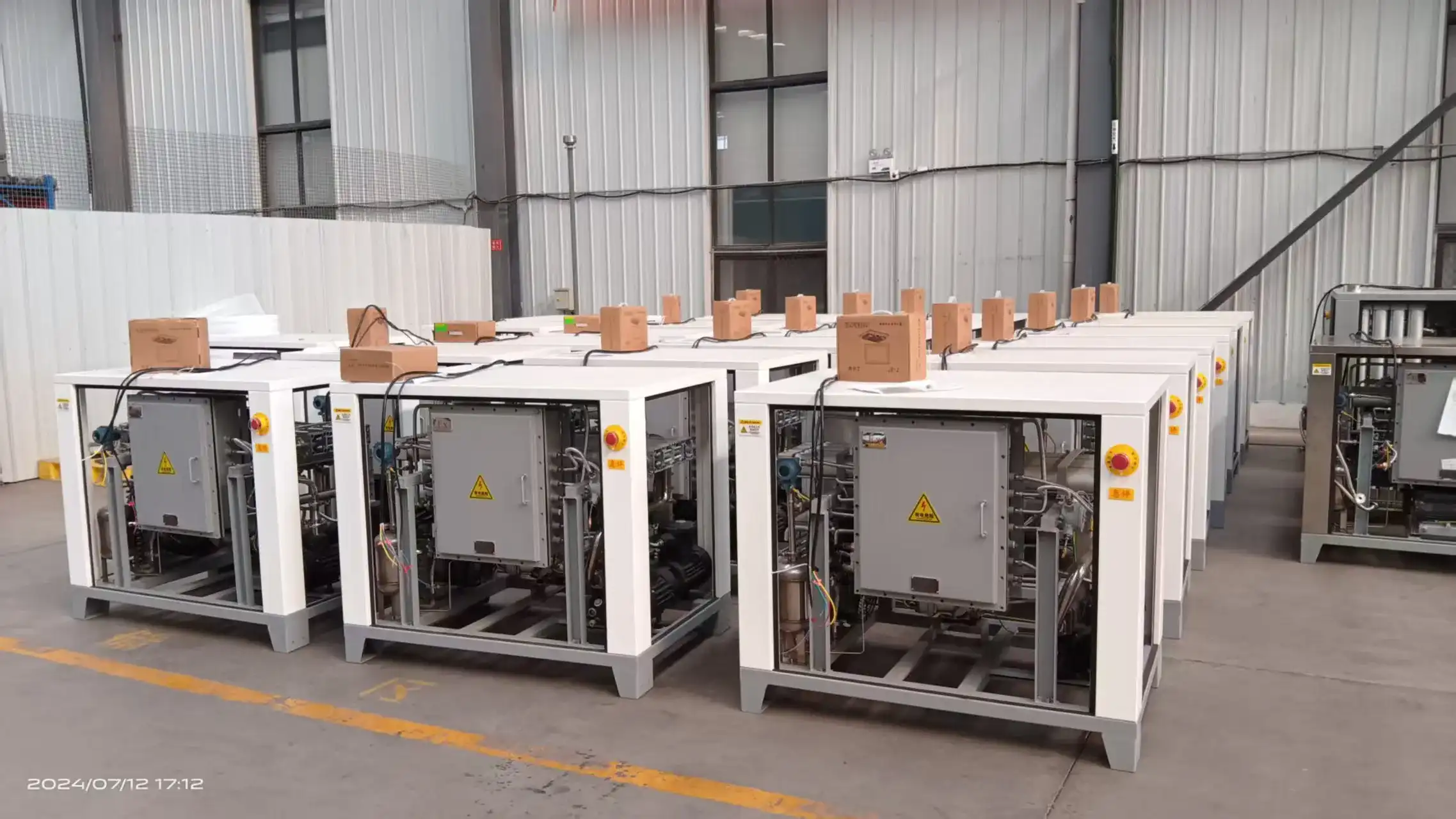
Methanol condensate is miscible with water, so stratification does not occur upon standing. Dehydration is graded according to the intended use of the recovered liquid: for reuse in low-demand scenarios such as cleaning, it is directly blended after testing; for reuse in reaction dosing, ordinary distillation is sufficient - methanol and water do not form an azeotrope, and the methanol concentration collected at the top of the column can be very high. This is one of the few alcohol varieties that are easy to handle. The alcohol-containing wastewater from the bottom of the column is collected separately, and after measuring the chemical oxygen demand load, it is discharged into the sewage system.
The energy consumption for distillation dehydration accounts for the majority of operating costs. During configuration, thermal integration should be incorporated: the overhead vapor is used to preheat the feedstock, and the low-level heat energy of the condenser is utilized for regeneration in the precooling section. After the cascade utilization of thermal energy, the unit cost of the dehydration process can be significantly reduced.
Key points of configuration and selection
| project | Characteristics of methanol | Configuration considerations |
|---|---|---|
| boiling point | About 65℃ | Two-stage condensation pressure temperature level |
| water-soluble | Completely miscible with water | If the condensate does not separate into layers, it needs to be rectified and dehydrated |
| toxicity | Among common alcohols, it is on the higher side | Closed collection with concentration priority |
| Lower Explosive Limit (LEL) | low | Grounding flow rate control point by point |
| Azeotrope | Does not boil with water | Ordinary distillation can achieve high concentration |
| wastewater | High chemical oxygen demand containing alcohol | Collect and measure separately |
How to implement operation management
- Regularly detect the negative pressure of the collection system and the concentration on the operating surface, and ensure adequate personal protection;
- Record the intake concentration and condensation temperature level by batch and establish a corresponding relationship;
- The concentration and moisture content of the recycled liquid are tested batch by batch, and the recycled liquid is sorted and reused according to the test results;
- The wastewater from the tower kettle is measured separately, and its alcohol content is regularly tested;
- Include anti-static grounding in the monthly inspection point by point, with a focus on verification in the low temperature section;
- Regularly inspect the discharge outlet at the later stage of adsorption or membrane separation to verify the effectiveness of the control measures.
Frequently Asked Questions
What is the appropriate purity level for methanol recovery liquid to be reused in reaction batching?
Based on the reaction system, most ingredients are required to be above 99%. Methanol and water do not form an azeotrope, and the overhead product from ordinary distillation can stably achieve this level. After batch-by-batch testing, it can be blended for use.
Is it safe to use activated carbon to adsorb methanol tail gas?
It can be used for low-concentration control sections, but attention should be paid to the heat of adsorption: methanol has a moderate exothermic adsorption, and high-concentration inlet gas directly entering the carbon bed poses a risk of temperature rise. It is safer to condense and reduce the concentration before adsorption, and then proceed with operation.
Is the high water content in the condensate due to issues with the collection system?
First, check for entrained water and gas: Moisture from cleaning water vapor and flushing operations mixes in, leading to high water content in the condensate. Pre-cooling and dehumidification remove the water vapor first, reducing the amount of water vapor entering the condensation section. This benefits both the quality of the condensate and the downstream load.
This article is compiled by Luoyang Wohong Petrochemical Equipment Co., Ltd., which provides design, manufacturing, and operation and maintenance services for condensation recovery, membrane separation recovery, and complete solvent recovery equipment to chemical and pharmaceutical enterprises. If you need process evaluation or scheme configuration, please feel free to contact us for discussion.