

How to recycle toluene waste gas? Key points of condensation recovery and explosion-proof configuration for aromatic solvents
Release time: 2026-10-06
View count:
Toluene is a commonly used aromatic solvent in the coatings, ink, adhesive, and chemical synthesis industries. With a boiling point of approximately 110.6℃, it has a large evaporation capacity at room temperature and is classified as a flammable liquid. The recovery process inevitably involves the two key aspects of "collection and safety". Toluene has low solubility in water, making it well-suited for layered condensate separation. The primary recovery route is condensation, supplemented by layered dehydration. By clearly understanding the condensation temperature range and explosion-proof zoning, the toluene recovery device can effectively collect and stably transport the toluene, ensuring clear accounting for condensate reuse.
Where does the exhaust gas come from
The mixing, spraying, and drying processes in the paint and ink industry are the concentrated sources of toluene tail gas. The spraying process involves high air volume and significant concentration fluctuations; the drying process features high temperature, high concentration, continuous and stable tail gas, and the highest recovery value. The tail gas from the chemical synthesis process is mostly related to reaction conditions, with concentration fluctuating from batch to batch. Each stream of tail gas is separately collected: the high-concentration stream is directly condensed, while the low-concentration stream with high air volume is first concentrated and then condensed, so as to avoid wasting cold energy on diluent gas. For spraying tail gas containing paint mist, filtration and demisting are carried out before condensation - paint mist deposits on the heat exchange surface, leading to poor heat transfer and difficulty in cleaning, which are both future problems.
How to set up condensation configuration
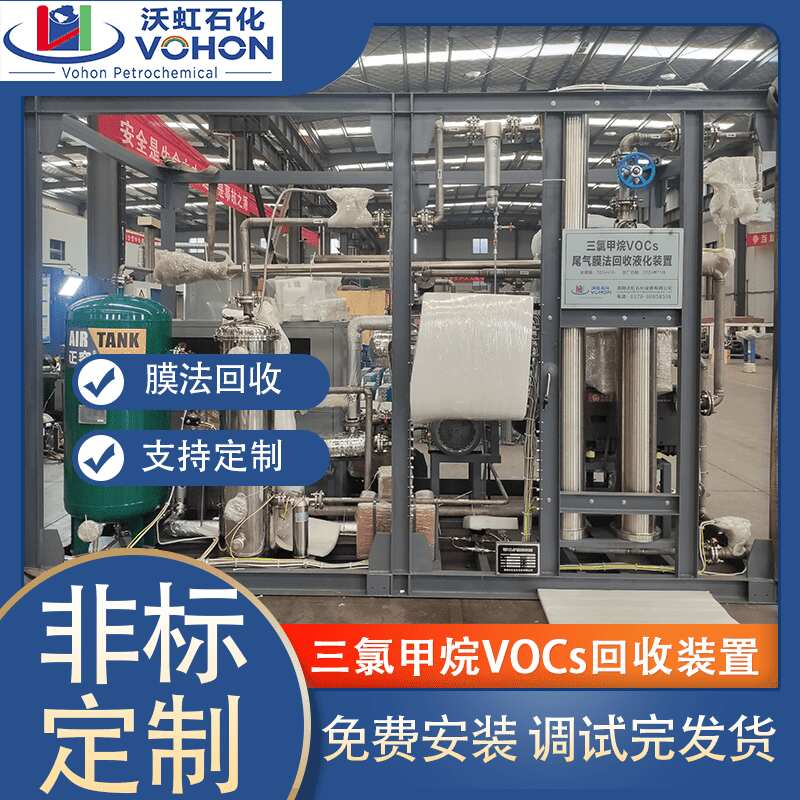
Methylbenzene has a boiling point over 100°C, and the requirements for condensation temperature are looser than those for low-boiling point solvents. Two stages of water cooling can recover most of it; when the recovery rate is required to be high, an additional low-temperature stage is added, and the recovery rate continues to increase as the temperature decreases. The configuration should be selected based on the balance point between recovery goals and cooling consumption. The tail gas contains air, and the emission gas after condensation still has a certain concentration, which needs to be controlled and treated to meet emission standards. As usual, a dehumidification device is installed before the low-temperature section under wet conditions, and the heat exchange face cream layer is managed based on pressure drop trends. The condensate tank is configured according to the storage requirements of methylbenzene, and the breathing emissions are connected to the recovery system without being exposed. Low-point condensate tracing and anti-condensation cannot be omitted in winter.
How to implement security configuration
Toluene has a low flash point and is flammable and explosive, so explosion-proof configurations must be strictly implemented: the collection and condensation system is designed according to explosion-proof zoning, and fans, pumps, and electrical equipment are selected according to regional levels; the entire pipeline is equipped with electrostatic bridging and grounding, and flange bridging wires are included in monthly inspections; concentration monitoring is arranged at the collection main pipe and discharge outlet, with linkage shutdown in case of exceeding limits; maintenance and hot work are subject to process approval, and gas detection is carried out before operation. Ventilation, grounding, and fire-fighting equipment in the tank area and device area are included in the inspection checklist, and safety items are fully equipped at once without any omissions.
How to manage condensate and reuse
Toluene condensate has low solubility with water and can be stratified upon standing still: a water separator separates out the aqueous phase, and the toluene phase is tested for boiling range and moisture content before being recycled according to its intended use. The requirements for indicators in the coating and ink processes vary, and the test data determines the destination; the aqueous phase contains trace amounts of toluene and is merged into the sewage system for treatment according to specifications. Before recycling, each batch is tested, and if the purity is insufficient, it is refined before reuse. A ledger records the destination of each batch, ensuring quality traceability. The amount of recovery and input is reconciled monthly, and in case of abnormal losses, the collection end seal and stratification operation are first checked, and then it is determined whether there is a problem with the device itself.
Configuration key points reference
| project | characteristic | Configuration considerations |
|---|---|---|
| boiling point | About 110.6℃ | Primarily utilizing two-stage water cooling |
| water-soluble | Low solubility in water | Static stratification of water distribution tank |
| flammability | Low flash point | Strict selection of explosion-proof partitions |
| static electricity | Accumulated risk | Monthly inspection of jumper grounding |
| Paint mist | Spraying exhaust gas entrainment | Filtering and demisting before condensation |
| Vent gas | There is still concentration after condensation | Check and treat the segment before discharging |
How to implement operation management
- Collect in high and low concentration groups, with the paint mist stream first filtered to remove mist;
- Primarily employing two-stage water cooling, a low-temperature section is added to meet high yield requirements;
- Explosion-proof partition selection, monthly inspection of electrostatic grounding;
- Concentration monitoring exceeds the limit, and hot work is subject to approval according to established procedures;
- The water separator is left to stand and stratify, and the toluene phase is detected and then re-mixed;
- The recycling volume and input volume are reconciled on a monthly basis, and any anomalies are first investigated at the collection end.
Frequently Asked Questions
Is it feasible to mix and collect toluene and ester solvents?
When solvents with significant compositional differences are mixed and collected, the quality of the condensate is mutually influenced, and if it cannot be reused separately, its value will decrease. If conditions permit, separate collection and recycling should be carried out. For those that cannot be separated, they should be reused for mixed purposes and proper records should be kept. The destination should be confirmed in advance with the paint application process.
What should we do if the moisture content of the recycled toluene exceeds the standard?
First, extend the standing time of the water separation tank, and then check whether the water separation interface control is normal; if it still fails to meet the standard, proceed to the dehydration process, and inspect and control it batch by batch. Condensate that fails to meet the standard shall not enter the recycling process.
What should we pay attention to during winter operation?
The condensate pipeline is heated, the insulation of the water separator is checked, and the frequency of discharge is adjusted according to the condensate volume; the volatilization of toluene decreases at low temperatures, and the concentration at the collection end is different from that in summer, so the baseline values are calibrated separately according to the season.
This article is compiled by Luoyang Wohong Petrochemical Equipment Co., Ltd., which provides design, manufacturing, and operation and maintenance services for condensation recovery, membrane separation recovery, and complete solvent recovery equipment to chemical and pharmaceutical enterprises. If you need process evaluation or scheme configuration, please feel free to contact us for discussion.