

How to recycle NMP waste gas in the lithium battery coating workshop? Collection and recycling configuration of coating and drying exhaust gas
Release time: 2026-10-05
View count:
NMP (N-methylpyrrolidone) used for coating the positive electrode of lithium batteries is one of the largest solvents consumed in the entire battery cell manufacturing process. The post-coating drying process evaporates and exhausts all NMP, and the exhaust gas from a single coating machine carries a large amount of NMP vapor. With a boiling point of about 202℃ and low vapor pressure at room temperature, NMP may seem easy to collect. However, the exhaust gas is characterized by high volume, high temperature, and high moisture and dust content, requiring specialized collection and condensation configurations. If recycling is done well, the reuse rate of NMP will increase, and the cost of the coating process will also be reduced.
What are the characteristics of exhaust gas
Four characteristics of coating oven exhaust gas: high temperature - the exhaust temperature of the oven is often above 80°C; high air volume - the oven requires high air volume for temperature uniformity, and the exhaust volume varies with the coating width and vehicle speed; concentration fluctuates with vehicle speed - as the coating vehicle speed increases, the evaporation of NMP also increases; contains trace amounts of dust and water vapor - residuals from the slurry components and the drying environment. These characteristics determine the configuration approach: first, cooling and dust removal pretreatment, then fractional condensation recovery, and finally emission control at the end, with each stage managing its own segment.
How to perform collection and preprocessing
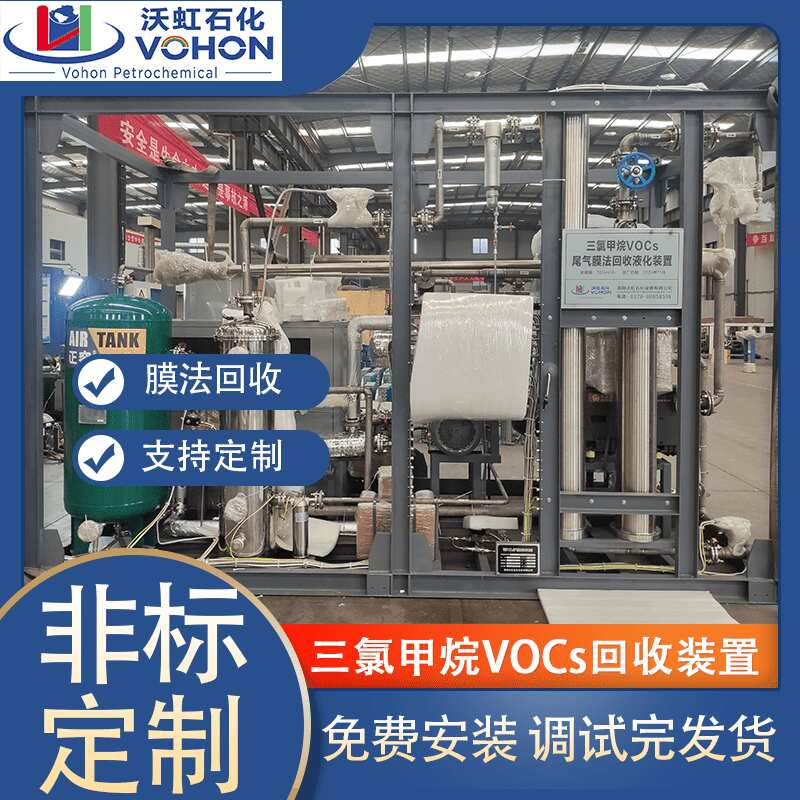
Based on oven exhaust, the partitioned air valves are adjusted according to the coating plan: the load difference between double-sided coating and single-sided coating is significant, and partitioned control stabilizes the inlet conditions of the condensation section. Pre-treatment begins with temperature reduction - the heat recovery heat exchanger reduces the exhaust gas temperature from above 80°C to the suitable inlet temperature for the condensation section, saving both cold and heat energy; then it filters and removes dust to prevent dust deposition on the heat exchange surface from affecting heat transfer. Duct insulation and condensate drainage are carried out simultaneously, ensuring that condensate precipitated during the temperature reduction of high-temperature exhaust gas can be smoothly drained away without accumulating inside the duct.
How to configure condensation recovery
NMP is miscible with water and has a high boiling point, requiring a low condensation temperature level. Two-stage water cooling or even single-stage water cooling can recover most of the heat, which is where it saves more cooling energy compared to low-boiling point solvents. The condensate is a mixture of NMP and water, and the water content affects reuse: fractional condensation separates the high-temperature condensate (with high concentration) from the low-temperature condensate for collection. The high-concentration condensate can be simply dehydrated and reused to prepare slurry, offering advantages in both quality and cost. The tail-end exhaust gas is treated and discharged after meeting emission standards. The system is managed for air tightness to reduce concentration dilution caused by air leakage. There are also systematic adjustments during operation: before increasing the vehicle speed, the remaining capacity of the condensation section is checked first, and the switching of the partition air valves is advanced according to the coating plan. With stable inlet conditions, fluctuations in condensate concentration and recovery rate are minimized. During the first month of system operation, the inlet temperature and condensate volume are recorded daily, and the adjustment range is linked to the corresponding data changes. Operators adjust according to the records, which is more stable than relying on experience.
Configuration key points reference
| link | characteristic | Configuration arrangement |
|---|---|---|
| Oven exhaust gas | High temperature and high air volume | Regulation of partition air valve |
| Preprocessing | Cooling and dust removal | Heat recovery and filtration |
| Condensation temperature level | High boiling point, low requirement | Water cooling is the main method to save cooling capacity |
| Condensate | NMP is miscible with water | Collect by grade and store in separate tanks |
| "Check and control section" | Tail-end emissions meet the standard | Emissions after treatment |
| Airtight management | Prevent concentration dilution | Regular verification of leakage points |
How to implement operation management
- The air valves in the oven zones are adjusted according to the coating plan, with a focus on maintaining stable inlet conditions;
- Heat recovery and precooling are carried out first, followed by cooling before entering the condensation section;
- The filter media is replaced based on the trend of pressure difference across the filter to protect the heat exchange surface;
- Graded condensate is collected in separate tanks, and the water content is tested on a batch-by-batch basis;
- The recycling quantity and slurry input quantity are reconciled on a monthly basis;
- Regularly detect the concentration at the emission outlet and conduct annual verification of air tightness.
Frequently Asked Questions
What should I do if the recovered NMP has a high water content?
High-concentration condensate is prioritized for re-blending, while low-concentration condensate is reused after dehydration through distillation. The water content is tested batch by batch, and the re-blending ratio is determined based on the test results, ensuring that the slurry performance remains unaffected. Batch records are kept to track the whereabouts of each batch.
Should the recycling system be modified after increasing the coating vehicle speed?
The increase in vehicle speed leads to an increase in evaporation capacity. First, check the margin and pre-treatment capacity of the condensation section, and expand the capacity of the sections with insufficient margin; simultaneously, review the adjustment range of the partitioned air valves to ensure that the inlet conditions remain stable.
Is there a big difference in operation between winter and summer?
In summer, due to the high cooling water temperature, the condensation temperature and yield may fluctuate. The circulating water system should be verified based on summer operating conditions. In winter, as usual, precautions against condensation and freezing in the condensate pipeline should be taken. When changing seasons, compare and review the two sets of data.
This article is compiled by Luoyang Wohong Petrochemical Equipment Co., Ltd., which provides design, manufacturing, and operation and maintenance services for condensation recovery, membrane separation recovery, and complete solvent recovery equipment to chemical and pharmaceutical enterprises. If you need process evaluation or scheme configuration, please feel free to contact us for discussion.