

Luoyang Wohong Petrochemical Equipment: Introduction to Emergency Response Drills and Abnormality Handling Support Services for Solvent Recovery Unit
Release time: 2026-09-26
View count:
The effectiveness of handling anomalies in solvent recovery units depends on the preparations made before the anomaly occurs: who will make the judgment, what order to follow in handling, where the spare parts and tools are located, etc. If these issues are not considered until after the anomaly has occurred, it will already be too late. Emergency response drills and support services for anomaly handling should prepare handling cards for potential anomalies in advance. By rehearsing the procedures, we can handle anomalies in a systematic manner when they actually occur, minimizing the impact.
This approach is particularly useful for teams managing multiple sets of devices simultaneously: abnormal situations of different devices are consolidated into a single set of disposal cards, drills are conducted on a quarterly rolling basis, and personnel's disposal actions become memorized, so they do not panic when encountering abnormalities.
The value of drills lies in turning the division of labor on paper into muscle memory: when a real anomaly occurs, the first reaction of the personnel on duty determines the direction of the situation. It's better to conduct drills less frequently but thoroughly, rather than just going through the motions, and keep records every time.
What situations are covered by the disposal card
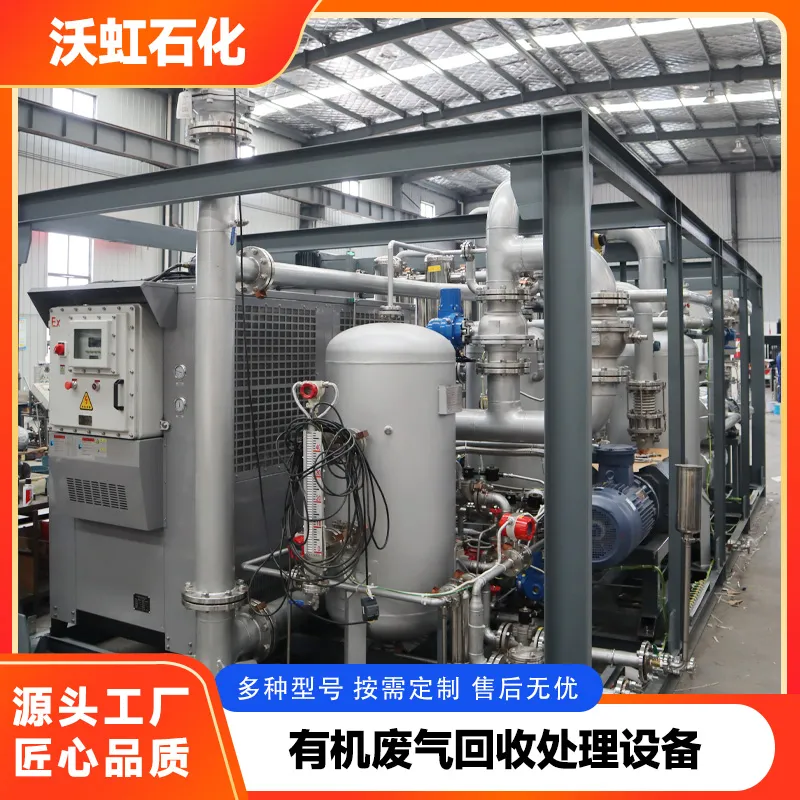
Compiled based on the risk points of the device: condensation temperature level out of control, abnormal drop in vacuum degree, recovery liquid level exceeding limits, pump and compressor trips, communication interruption of the control system, power outage and recovery, each item should be written into a disposal card. Each card should clearly state three things: judgment basis - which parameters confirm the abnormality; disposal sequence - what to do first and last, and which actions are strictly prohibited; reporting and recording - who to notify and what to record.
The disposal card is not a condensed version of the operation manual: the operation manual explains how to start and stop normally, while the disposal card explains what to do in case of an accident. The two have different perspectives and cannot be substituted for each other.
How to organize a drill
The drills are conducted in two ways: scenario deduction and on-site practical operation. Scenario deduction involves going through the process in the conference room, covering all cards once every six months. On-site practical operation involves selecting key cards - power outage recovery, vehicle jump start - and conducting actual operations on the device, once or twice a year. After the drills, a review is conducted, and any steps written on the cards that are awkward or impractical are revised on the spot.
| link | frequency | Content |
|---|---|---|
| Scenario deduction | biannually | All disposal cards have gone through the process |
| On-site practical operation | Once or twice a year | Key cards for power outage recovery, vehicle jump-start, etc |
| Review and revision | After each drill | The content of the card is subject to actual revisions |
| New employee disclosure | Before taking up the post | Handling card learning and teaching |
| Collaborative enterprise contingency plan | every year | Integrate with the emergency response system of the entire factory |
| Record archiving | each time | Drill records and revised versions are retained |
How to carry out support services
The support provided by the service provider covers three levels: assisting in sorting out risk points and drafting disposal cards during the preparation stage; participating in observation and review during the rehearsal stage, pointing out the bottlenecks in the process; providing remote first-level judgment and on-site disposal after the occurrence of anomalies, and incorporating the anomaly into card revision after disposal is completed. The three levels of service are linked with operational data services: when data services detect abnormal trends, disposal cards provide a handling path, forming a closed loop from detection to disposal.
How to proceed with the ground handling arrangements
- Combing the risk points of the device and forming a disposal card list and draft;
- Review the cards jointly with the station side, clarify the division of labor, interface, and reporting path;
- Organize deduction and practical operation based on frequency, and archive the drill records;
- Each time after a drill or real anomaly, the card is revised and the version is controlled;
- Complete the disposal card disclosure before the new employee starts work;
- Conduct a joint verification of the annual and plant-wide emergency response plans.
Frequently Asked Questions
With small devices and limited personnel, is it necessary to conduct drills?
It is necessary, but it can be simplified: there are fewer disposal cards for small devices, and we can allocate half an hour during the pre-shift meeting to review one card. The format is simple, and the key is to ensure that someone knows what to do first in case of an abnormal situation.
What should we do if the disposal card is revised frequently and the on-site version does not match?
Version control: Only the current version is available on site, and the old version is retracted after revision. Card numbers are supplemented with version numbers, and during drills, the version is checked conveniently, and any old version found is replaced on the spot.
What is the relationship between exception handling and maintenance?
The disposal card addresses the issue of safely stopping and isolating the device, while maintenance addresses the issue of repair. The final action of disposal is often the handover to maintenance, and the conditions for this handover are clearly stated in the card to ensure a smooth transition between the two stages.
This article is compiled by Luoyang Wohong Petrochemical Equipment Co., Ltd., which provides design, manufacturing, and operation and maintenance services for condensation recovery, membrane separation recovery, and complete solvent recovery equipment to chemical and pharmaceutical enterprises. If you need process evaluation or scheme configuration, please feel free to contact us for discussion.