

How to manage solvent evaporation in wastewater treatment stations? Covered gas collection and exhaust gas collection configuration
Release time: 2026-09-26
View count:
The wastewater treatment stations of chemical and pharmaceutical enterprises are often overlooked as sources of volatile emissions: the liquid surfaces of regulating ponds, air flotation tanks, and aeration tanks are open, and solvents dissolved in the wastewater continuously escape due to aeration and temperature differences. Although the concentration of such tail gas is not high, the volume of gas emitted is large and stable, making a significant contribution to unorganized emissions at the factory boundary. The approach to control is to cover the open surfaces with a gas collection cover, and then decide whether to recycle or treat based on the concentration.
The characteristics of volatilization control in wastewater stations are numerous and scattered locations: the tank sizes vary, and the covering methods are limited by slag removal and maintenance. The collection configuration must be coordinated with the water treatment process, and operational procedures should not be complicated for the sake of gas collection.
The roofing project is often arranged simultaneously with the renovation of water stations: pool body corrosion prevention, railing renewal, and roofing gas collection are carried out together, with a shared schedule for the construction period. The cost is lower than that of separate projects, the operational connection is smooth, and the final inspection can be completed in one go.
Where does the volatilization come from
Volatilization intensity is related to the solvent content in wastewater, water temperature, and turbulence intensity: the strongest volatilization occurs in the regulating reservoir section of high-concentration wastewater influent, where the stripping effect of the aeration tank accelerates the escape of dissolved solvents, and volatilization significantly decreases after the secondary sedimentation tank. Collection and disposal are differentiated according to the functions of the tanks: priority is given to the regulating reservoir and aeration tank, while the advanced treatment section is determined based on the monitoring situation at the plant boundary.
Seasonal factors should also be considered: water temperature is high and evaporation is strong in summer, while it is weak in winter. The collection system should be verified based on summer operating conditions, and a surplus capacity should naturally be reserved for winter.
How to perform gas gathering with a cap
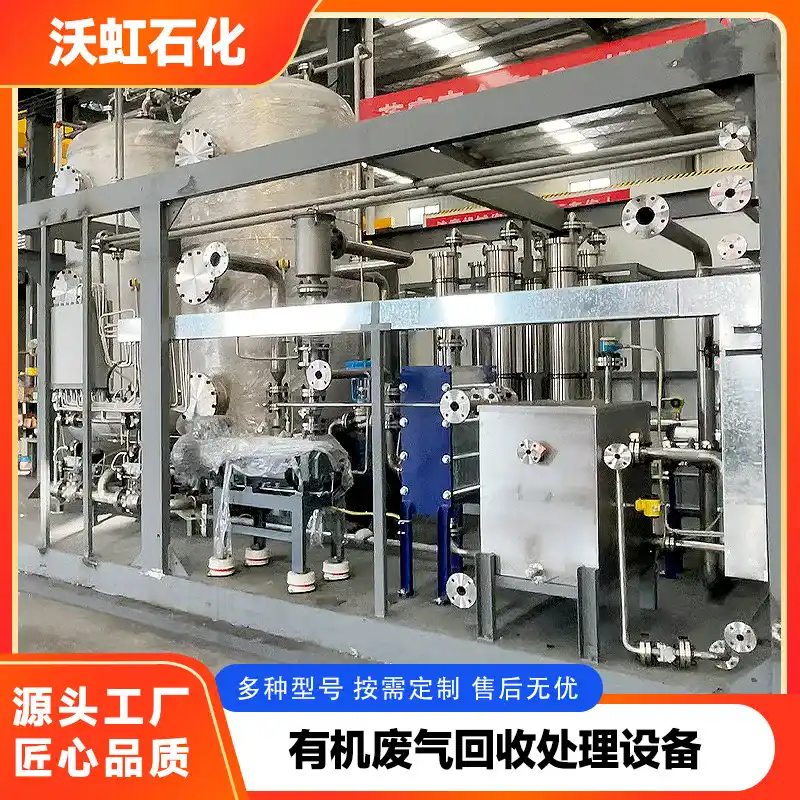
The covering method is selected based on the tank size and operational requirements: small tanks use integral arched covers, large-area aeration tanks use floating covers or tensioned membrane covers, and areas requiring slag removal are equipped with openable access holes. The gas collection hood maintains a slight negative pressure, and the air volume is determined based on preventing gas leakage inside the hood, which should not be too large - too much air extraction lowers the concentration inside the hood, making downstream treatment uneconomical and also accelerates the cooling of the wastewater.
The sealing of the maintenance hatch is a high-risk point for operational issues: after slag removal, the cover plate may not be reset tightly, and the observation hatch may often remain open, leading to a immediate decline in collection efficiency. The sealing status should be included as a routine inspection item for the water station.
How to handle it after collection
The exhaust gas from the wastewater station has a low concentration but a large volume, making it uneconomical to directly enter the condensation recovery system. It is advisable to separate the gas based on its concentration. The section of the regulating pool with relatively high concentration should be connected to the solvent recovery system after pretreatment, while the low-concentration and high-flow part should be separately treated in a separate treatment section, with the treatment method selected according to emission requirements. For the exhaust gas from sulfur- and nitrogen-containing wastewater stations, the impact of corrosive components on equipment should also be considered.
| Pool section | Volatilization characteristics | Collection and processing arrangement |
|---|---|---|
| equalization tank | High-concentration influent water has the strongest volatilization | Priority stamping, followed by pre-treatment and then incorporated into recycling |
| Aeration tank | "Blow-off effect, large volume and high concentration" | "Zhang membrane or floating cover, separate branch" |
| Secondary sedimentation and advanced treatment | Weak volatility | Decide whether to collect based on factory boundary monitoring |
| Sludge treatment area | Intermittent operation volatilization | Local collection during homework period |
| inspection access panel | Improper sealing leads to leakage | Sealing is included in the inspection |
| Air volume control | Micro-negative pressure does not escape | Adjust the air valve according to the concentration inside the hood |
How to implement operation management
- Regularly measure the air volume of each branch in each pool section, and inspect the sealing status one by one;
- Monitor the concentration at the factory boundary on a quarterly basis, with a focus on investigating the tank sections where there is an abnormal increase in volatilization;
- The condensate and separated water from the pretreatment section are returned to the wastewater system and are not discharged outside;
- Before slag removal and maintenance operations, open the corresponding branch, and restore the seal after the operation;
- Compare the bypass air volume during the high-concentration water intake period with the operation records to verify the collection efficiency.
Frequently Asked Questions
Are all the pools covered?
No need. In terms of volatilization intensity, the regulating tank and aeration tank should be prioritized. The deep treatment section has weak volatilization, and the investment and benefit of covering are not proportional. Use the monitoring data at the plant boundary to guide the decision-making. The tank sections that exceed the standards should be addressed first.
Will the water treatment operation be affected after capping?
The affected links are mainly slag removal, sampling, and equipment maintenance, which can be solved through access ports and openable covers. In the design stage, involving water treatment operators in the layout is much smoother than making changes after construction is completed.
Will the integration of tail gas into the solvent recovery system affect the recovery section?
The low-concentration exhaust gas will be merged into the intake air, diluting it. Only the section of the regulating pool with relatively high concentration will be merged, and it will be further merged after pre-treatment and concentration; the low-concentration part will be treated separately and will not enter the recovery section.
This article is compiled by Luoyang Wohong Petrochemical Equipment Co., Ltd., which provides design, manufacturing, and operation and maintenance services for condensation recovery, membrane separation recovery, and complete solvent recovery equipment to chemical and pharmaceutical enterprises. If you need process evaluation or scheme configuration, please feel free to contact us for discussion.
Share to