

How to recycle the mixed tail gas of toluene and ethyl acetate? Condensation configuration ideas for mixed solvent components
Release time: 2026-09-26
View count:
The exhaust gas from actual workshops rarely consists of a single component: in processes involving the use of coatings, adhesives, and printing processes that involve the mixing of toluene and ethyl acetate, the two components in the exhaust gas fluctuate with each batch. The recovery and configuration of mixed solvents differ from those of single components: due to the different boiling points and water solubilities of each component, the condensation temperature and the destination of the condensate must be determined based on the actual dew point and stratification behavior of the mixture.
Two common issues arise when mixed components are not handled properly: fluctuations in recovery rates after changing batches due to temperature settings based on a single component; and difficulties in separating two types of condensates mixed in a single tank before reuse. By clearly calculating the phase behavior of components during the configuration stage, there will be significantly fewer issues during the operation stage.
From an investment perspective, the difference between mixed-component recovery units and single-component separation units is not significant: the difference lies in parameter tuning and condensate post-treatment. By accumulating component ledgers and operational data, the same unit can achieve a revenue increase of over 10% compared to extensive management, which also reflects the management value under mixed operating conditions.
How to calculate the dew point of mixed components
The dew point of a mixed vapor is not the average of the dew points of its two components: it is calculated segment by segment based on the relationship between the partial pressure of each component and the saturated vapor pressure. As the batch ratio changes, the partial pressure changes, and the dew point follows suit. In terms of configuration, the dominant operating condition is taken: the basic temperature level is determined based on the ratio with the highest proportion. For workshops with large fluctuations in ratio, extreme ratios are also calculated separately, with the temperature range covering both ends.
The calculation does not have to be precise to the degree: after estimating the range, the device sets aside a margin for temperature adjustment, and during operation, it is adjusted based on the actual measured exhaust concentration.
How to arrange the condensation temperature level
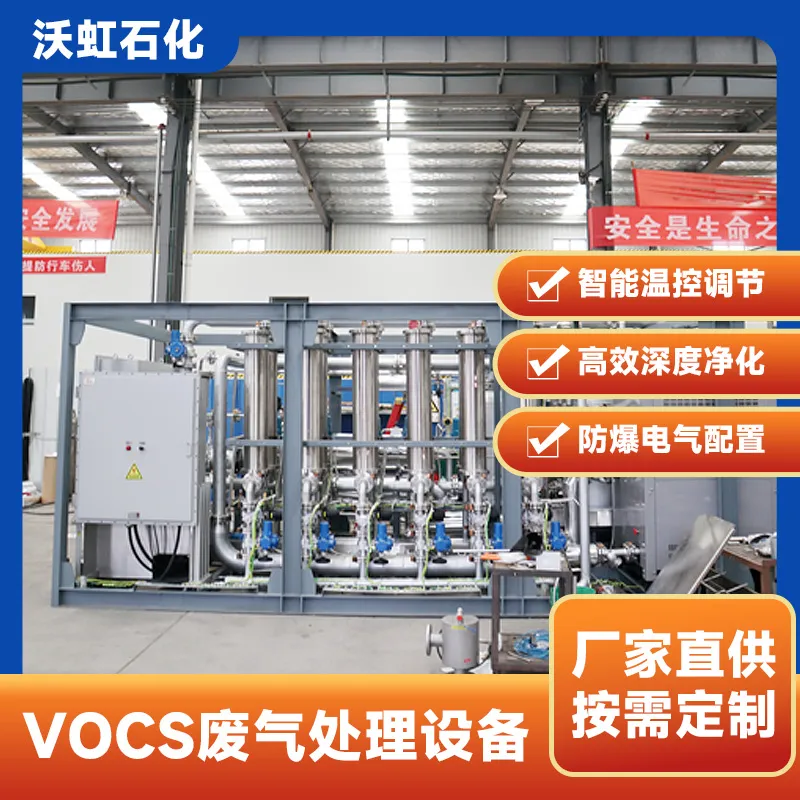
Two-stage condensation is a conventional configuration for mixed solvents: the first stage condenses the high boiling point components and water vapor at a higher temperature, while the second stage collects the volatile components at a lower temperature. The boiling point difference between ethyl acetate and toluene is not significant, so the allocation of temperature levels in the two stages is adjusted based on actual exhaust gas concentration measurements, without necessarily adhering to theoretical allocation. Attention should be paid to frost layer management in the low temperature section, and precooling and dehumidification should be carried out first when there is a lot of water in the incoming gas.
The lower the temperature level, the better is not always true for deep cooling: the lower the temperature level, the higher the cooling cost, and the increase in condensate viscosity makes separation more difficult. Based on emission requirements, we can deduce the required recovery rate and operate at the lowest temperature level that is sufficient.
Condensate separation and reuse
Toluene and ethyl acetate are miscible, and the condensate does not separate into layers. Before reuse, purification is required: simple standing does not separate the components, and the degree of treatment depends on the purpose - when reused for batching and the indicators allow, it is blended after batch testing; when the indicator requirements are high, distillation and cutting are used to recover a single component.
| project | Ethyl acetate | toluene | Configuration considerations |
|---|---|---|---|
| boiling point | About 77℃ | About 111℃ | The basis for two-level temperature level allocation |
| water-soluble | Partial miscibility | Slightly soluble | The treatment path of aqueous phase |
| Condensate form | Miscible with toluene | miscible with esters | No stratification, purification required |
| Recycling value | High, volatile | "After being tall and homogenized, it becomes even better." | Inspect and determine the destination by batch |
| Batch fluctuation | The proportion changes rapidly | Same as left | Thermal position adjustment margin |
| Test Items | Purity, moisture | Purity, distillation range | Inspect each batch before reuse |
How to implement operation management
- Record the exhaust gas ratio and exhaust concentration by batch, and establish the correspondence between the ratio and temperature level;
- Adjust the two-stage temperature levels based on actual measurements, and observe the changes in the amount of recovered liquid after adjustment;
- The condensate is tested for components and moisture on a batch-by-batch basis, and is either diverted for reuse or purified according to the test results;
- Drain the condensate frequently in the pre-cooling section, and recheck the frost layer in the low-temperature section when the moisture content is high;
- In workshops where product switching is frequent, categorize and produce products of the same type in a centralized manner.
Frequently Asked Questions
Is it still worthwhile to recover mixed solvents? Doesn't separation increase costs?
Whether it is worthwhile depends on the destination of the condensate: if the workshop uses these two solvents for batching, the recovered liquid can be directly blended and reused after testing, eliminating the purification step and achieving good economic benefits; only when a single component needs to be sold, will additional separation investment be required.
The proportioning fluctuates greatly, and adjusting the temperature level according to each batch is too troublesome. What should we do?
Select a middle ratio that covers most batches as the basic temperature level, sacrificing some recovery rate in the short term for extreme batches, and relying on the final inspection stage to ensure quality. The operational cost of frequently adjusting the temperature level is often higher than the loss of recovery rate.
What is the reason for the high moisture content in the condensate?
Incoming gas with water: Water vapor enters with the exhaust gas and condenses together in the condensation section. First check the water content operation at the collection point and the condensate in the pipeline. If the dehumidification in the precooling section is well done, the condensate water content will significantly decrease.
This article is compiled by Luoyang Wohong Petrochemical Equipment Co., Ltd., which provides design, manufacturing, and operation and maintenance services for condensation recovery, membrane separation recovery, and complete solvent recovery equipment to chemical and pharmaceutical enterprises. If you need process evaluation or scheme configuration, please feel free to contact us for discussion.