

What is the difference between oil and gas recovery of crude oil loading and refined oil loading? The difference of medium property and configuration
Published: 2026-10-18
View count:
What is the difference between the oil and gas recovery of crude oil loading and the loading of refined oil? Straight answer: the root of the difference is in the medium-crude oil is a mixture of wide fractions, sulfur and salt water content, high condensation point, strong corrosion, configuration focus on anti-corrosion, anti-blocking and dehydration; refined oil homogeneous stability, mild corrosion, configuration focus on recovery efficiency and convenient operation. The same is the exhaust of the truck, the crude oil side is blocked by condensate and salt, and the refined oil side is worried about concentration fluctuation and efficiency. The logic of the device body is similar, and the material grade, temperature zone setting and operation center of gravity are completely different. This article clarifies the distinction between media and configuration adaptation.
Differences in media properties
The composition of crude oil is wide from light hydrocarbon to asphaltene. There are many heavy components in the gas phase, and condensate and wax are precipitated when cold. Sulfur-containing compounds bring corrosion, and hydrogen sulfide is not friendly to seals and metals. Salts and sediment enter the gas phase during storage and transportation, blocking filters and grinding valves. Refined oil is a homogeneous product after blending, with narrow fraction range, stable physical properties, less corrosive medium, and fluctuation of working conditions mainly from grade switching. Simply put: crude oil loading and recycling is an anti-blocking and anti-corruption problem, while refined oil loading and recycling is an efficiency stability problem. The solutions to the two problems are different.
Comparison of exhaust characteristics
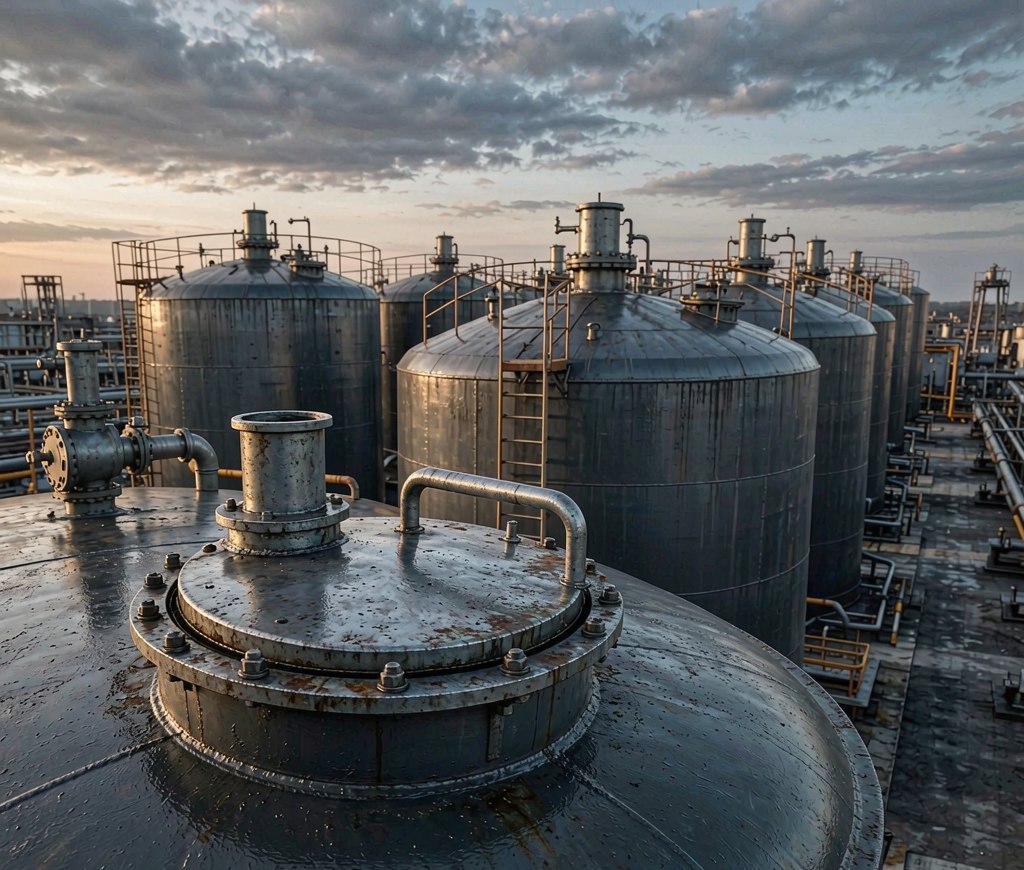
The common feature of loading exhaust is instantaneous large displacement: as soon as the crane position is opened, the gas phase in the tanker is pushed out by the liquid phase, which lasts until the end of loading, and the load is pulsed. The difference is in concentration and composition: the exhaust concentration of refined oil loading is high and stable, close to the corresponding value of the saturated vapor pressure of the brand. The loading method also affects the exhaust form: the top is highly volatile, and the bottom is matched with a closed crane pipe and a dry separation valve, so that the exhaust is concentrated and controllable. No matter crude oil or refined oil, the closed collection of crane position is the starting point of treatment. The difference is that the crude oil side should be pretreated after collection.
Device configuration differences
The configuration addition on the crude oil side: filter and remove liquid at the front end to stop salt and condensate; The material grade shall be increased according to the sulfur content, and the seal shall be of sulfur-resistant grade. The temperature zone is set to consider the condensation point, and the anti-recombination points are waxed on the heat exchange surface. Condensate disposal shall be managed according to the caliber of oily sewage and cannot be simply reused. The configuration idea of the refined oil side: process selection according to concentration and gas volume, condensation plus adsorption or condensation plus membrane are common; The key point is the peak clipping of the buffer tank to the pulse load, and the main pipe and buffer capacity are configured according to the peak when the multi-crane position is operated at the same time. The quality of the recovered liquid is stable and the reuse channel is clear. The logical starting point for both configurations is the media list, which is based on the list core parameters and is not set by convention.
Different focus of operation and maintenance
There are three things to watch on the crude oil side in operation and maintenance: filter pressure difference (the earliest signal of salt and condensate blockage), heat exchange surface wax layer (periodic cleaning), and seal replacement frequency (short life in corrosive environment). Oil product side stare efficiency and stability: gas-liquid ratio and concentration fluctuation, the corresponding relationship between recovery liquid volume and concentration, load following when multi-crane position switching. In winter, both sides are anti-condensation. The standard of heat tracing and low point condensation on the crude oil side is higher. Blockage caused by wax condensation is more common in crude oil system. The maintenance plan is arranged separately according to the characteristics of the medium, and one set of plans is used to manage the two media, and one side is always taken care.
Configuration Key Points Comparison
| Comparison item | Crude oil loading | Product oil loading |
|---|---|---|
| Media Characteristics | wide cut sulfur containing salt | Homogeneous stable light corrosion |
| Exhaust concentration | Affected by temperature components | High and stable |
| Main risks | Plugging corrosion of condensate wax | concentration fluctuation efficiency |
| Front-end configuration | Filtration to remove liquid is indispensable | Conventional filtration can be |
| Material grade | Up-regulation according to sulfur content | Conventional carbon steel can meet |
| Condensate disposal | Management as per oily sewage | Recovery liquid reuse channel cleaning |
| Operation and maintenance center of gravity | Differential Pressure Wash Seal | Efficiency and load following |
Adaptation steps
- Confirm physical properties and corrosivity according to medium list;
- Calculate loading displacement and concentration range;
- Fixed collection methods and closed crane positions;
- According to the medium material and temperature zone;
- with buffer and pretreatment link;
- The operation and maintenance plan is arranged according to the characteristics of the medium.
Frequently Asked Questions
Can crude oil and refined oil share a recovery unit?
When the medium is similar and the corrosive environment is compatible, the merger can be evaluated and realized by grouping collection and adding quality branches. It is recommended to separate the occasions with large span. After the merger, the material grade shall be determined according to the strictest medium. The account shall be calculated according to the total investment, not only the money saved for one set of devices.
How long does the crude oil side filter clear?
Looking at the trend of pressure difference does not look at the fixed period: the rapid rise rate of pressure difference indicates that the incoming salt belt is seriously coagulated, and the frequency of cleaning or replacement will be encrypted accordingly. According to the data accumulated at the site, it is more reliable to determine the period than to copy the instructions.
Does the loading method have a great influence on the recycling effect?
Large: The lower part is matched with a closed crane tube to make the exhaust centralized and controllable, and the upper part is open and volatile and difficult to collect. During the transformation, the crane position sealing and the recovery system are designed synchronously, and the upper limit of recovery efficiency is determined in the collection link.
This article is organized by Luoyang wohong petrochemical equipment co., ltd. the company provides design, manufacture, installation, commissioning and operation and maintenance services for oil and gas recovery equipment, solvent recovery devices and buried composite pipe networks at gas stations, oil depots and chemical enterprises. if you need scheme configuration or on-site investigation, please contact and exchange.