

Luoyang Wohong Petrochemical Equipment: Introduction to Energy Consumption Benchmarking and Energy-saving Renovation Services for Solvent Recovery Devices
Release time: 2026-10-01
View count:
After several years of operation, the energy consumption of solvent recovery units often creeps up: scaling on heat exchange surfaces, refrigerant attenuation, control parameter drift, and changes in load structure, each of which is not severe, but when combined, the energy consumption per ton of solvent recovery is significantly higher than when it was first put into operation. Luoyang Wohong Petrochemical Equipment's energy consumption benchmarking and energy-saving renovation services quantify this invisible increase: first, benchmarking to identify where the gaps lie; then, renovation to address each gap item by item.
The foundation of benchmarking lies in data: the electricity consumption, cooling consumption, water consumption, and recovery volume of the device are recorded monthly, and converted into comprehensive energy consumption per unit of recovery volume. These values are then compared with the operational benchmark value and the average level of devices of the same model. For devices without benchmark data, the first task is to complete the metering and establish a baseline. Measurements should be taken for three months before considering any modifications - energy-saving modifications without a baseline are difficult to evaluate and sustain.
What is benchmarking against
Benchmarking can be conducted at three levels: at the aggregate level, we can look at the comprehensive energy consumption per unit of recovery to assess the overall status of the device; at the process level, we can break down energy consumption into condensing units, vacuum systems, fan and pump groups, and auxiliary systems to identify the links with abnormal proportions; at the parameter level, we can verify the matching degree of operating parameters such as temperature level setting, reflux ratio, and start-stop logic with the current operating conditions. Most benchmarking conclusions for devices focus on two or three types of issues: heat exchange surface status (scale and frost management), parameter drift (disconnection between settings and actual operating conditions), and load structure (the device continues to operate at the old pace after production changes).
The handling paths for the three types of issues are different: for status issues, rely on cleaning and maintenance to restore; for parameter issues, rely on parameter adjustment and calibration; for load issues, rely on adjusting the operation mode or local modification. Diagnose first and then make modifications, spending money where it counts.
What are the common energy-saving points
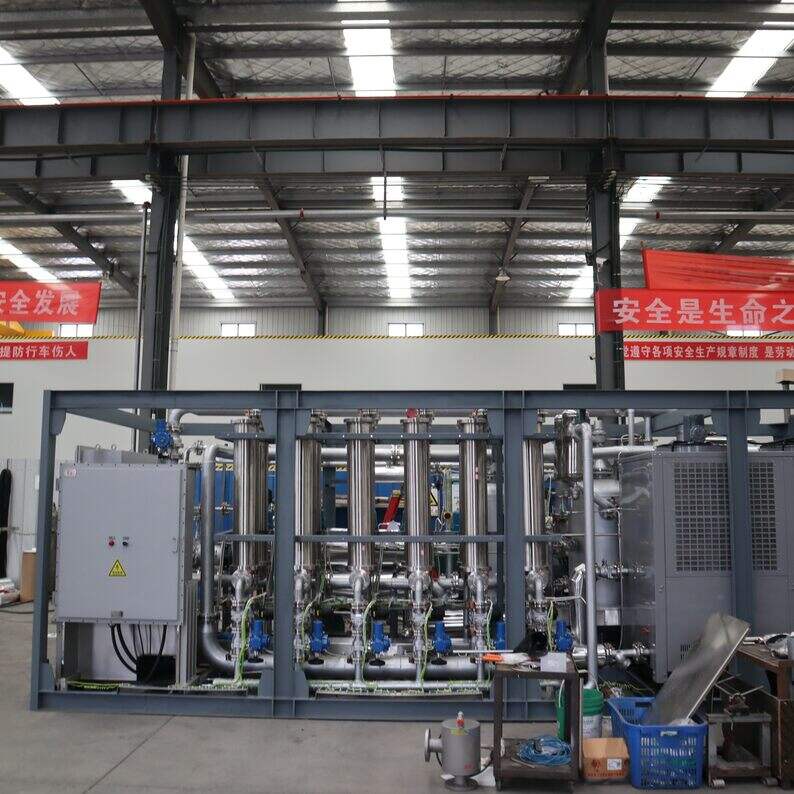
The energy-saving points with clear effects in practice are as follows: arranging cleaning according to the pressure drop trend of the heat exchange surface, which can increase the condensation temperature level after heat transfer recovery, resulting in a direct decrease in cooling consumption; utilizing the waste heat from the tower bottom or condensate for feed preheating, thereby reducing the reboiling load in the rectification section; applying frequency conversion retrofits to fan and pump units with large load fluctuations, which can recover energy consumption proportionally during low-load periods; conducting seasonal leak detection and replenishment for the refrigerant system, where most of the hidden losses due to cooling capacity attenuation occur; recalibrating the control logic according to the current operating conditions, reducing the start-stop frequency, and thereby decreasing the ineffective power consumption of motors and compressors. Most of these projects require small investments and have a payback period measured in months, making them among the most cost-effective in energy-saving retrofits.
The priority of transformation is ranked as follows: zero investment first, small investment second, and then large investment. Participation management measures should be implemented first, and equipment transformation should be evaluated after seeing results, to avoid launching large projects right at the beginning.
Service content and delivery
| Service Phase | Job responsibilities | deliverables |
|---|---|---|
| Baseline establishment | Measurement and replenishment, along with three-month actual measurement | Energy consumption baseline report |
| Three-tier benchmarking | Comparison of parameters in the total quantity link | Gap quantification checklist |
| Energy-saving diagnosis | Status parameter load category three | Proposal for Energy Conservation |
| Implementation of transformation | Implement by stages according to priority | Renovation plan and construction |
| Effect Confirmation | Comparison of the same caliber before and after transformation | Energy-saving effect report |
| Follow-up visit | Quarterly data review | Follow-up visit and adjustment suggestions |
How to implement the service
- Complete the measurement and baseline, based on three months of actual test data;
- Three-tier benchmarking for total volume parameters, with gaps quantified item by item;
- The transformation is ranked according to zero investment, small investment, and large investment;
- The energy-saving point checklist is customized according to the actual situation of the device, without following a template;
- Compare the energy consumption before and after the transformation in writing, and confirm the effect with data;
- Conduct quarterly follow-up visits to track and prevent a rebound in energy consumption.
Frequently Asked Questions
Is it still necessary to conduct energy consumption benchmarking if the device is operating normally?
Normality does not equate to economy. It is not uncommon to find a double-digit energy-saving potential after benchmarking a device that is operating normally. The increase in energy consumption is gradual and subtle. You won't know until you measure, and the difference you measure is the operational cost saved.
Will the transformation affect production?
The management measures involving adjustments and participation will not require equipment downtime. Equipment modifications will be arranged in phases during maintenance windows, and major projects will be organized in conjunction with annual maintenance. The modification plan will be coordinated with the production schedule in advance to ensure controllable impacts.
How can the energy-saving effect be verified?
Before and after the transformation, comparisons of the same caliber shall be made, with baseline data as the yardstick. Measurements shall be jointly confirmed by both parties or entrusted to a third party, and the data shall be included in the acceptance documents. The criteria for effect verification shall be agreed upon before the transformation to avoid disputes afterwards.
This article is compiled by Luoyang Wohong Petrochemical Equipment Co., Ltd., which provides design, manufacturing, and operation and maintenance services for condensation recovery, membrane separation recovery, and complete solvent recovery equipment to chemical and pharmaceutical enterprises. If you need process evaluation or scheme configuration, please feel free to contact us for discussion.