

Current location: home page > Products > VOC exhaust gas treatment equipment
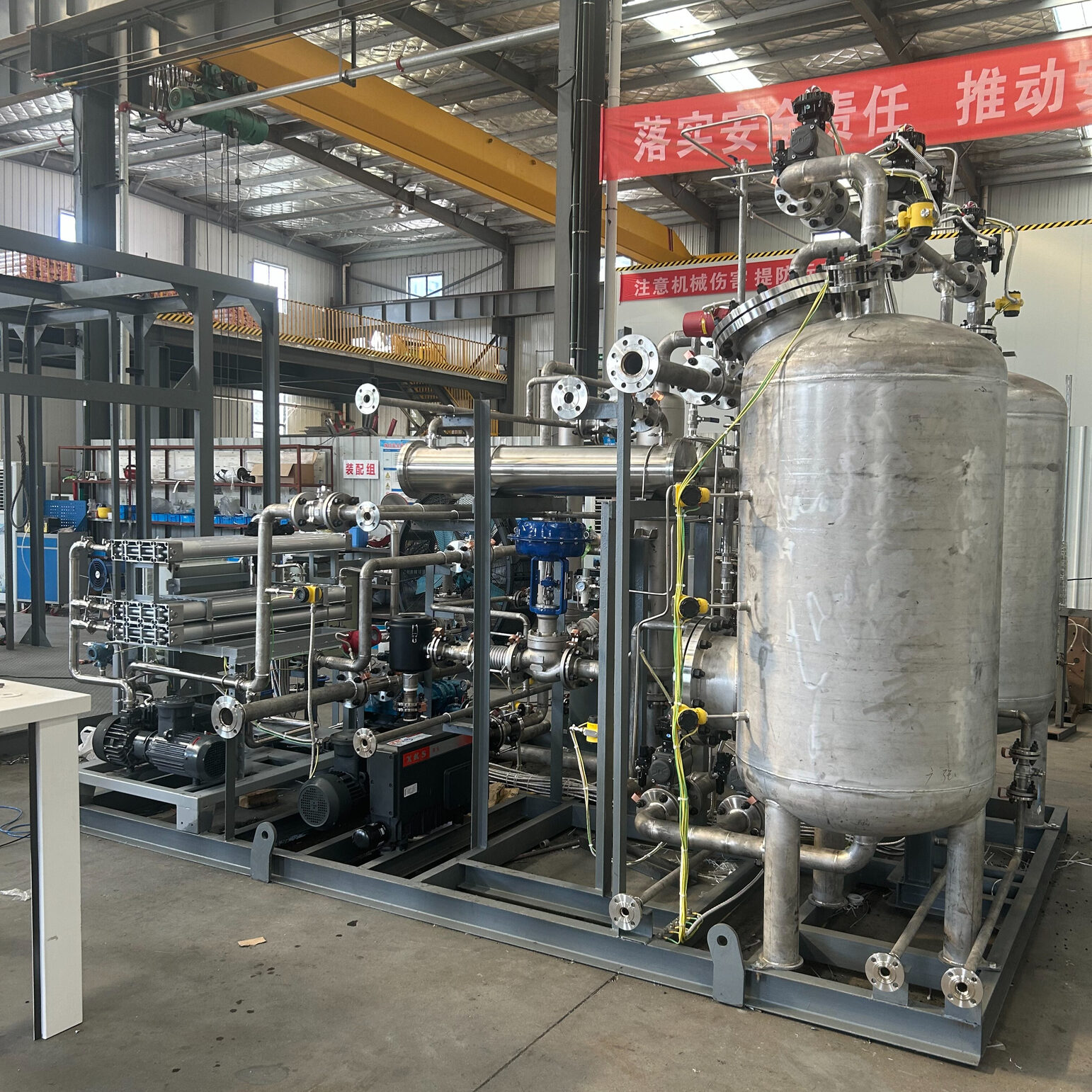
Brief description:The organic gas steam membrane for pharmaceutical and chemical tail gas treatment, also known as the pervaporation membrane, is the core separation component in the resource recovery process of VOCs tail gas in the pharmaceutical and chemical industry. It relies on the pervaporation separation mechanism to achieve selective separation between organic steam and inert gases
 News
The organic vapor membrane for pharmaceutical and chemical tail gas treatment, also known as the pervaporation membrane, is the core separation component in the VOCs tail gas resource recovery process in the pharmaceutical and chemical industry. It relies on the pervaporation separation mechanism to achieve selective separation between organic vapor and inert gas, thereby enriching and recovering organic solvents from the tail gas. When mixed tail gas containing solvent vapors such as ethanol, acetone, ethyl acetate, and dichloromethane contacts the membrane surface, the organic components preferentially dissolve on the membrane surface and diffuse through the polymer membrane. On the permeate side of the membrane, enriched organic vapor is formed due to the vacuum environment. Inert components such as air and nitrogen find it difficult to penetrate the membrane material and are discharged from the retentate side. This process achieves the concentration and separation of organic vapor, providing basic conditions for subsequent solvent liquefaction recovery.
The production conditions in pharmaceutical and chemical industries are complex. The tail gas generated in processes such as active pharmaceutical ingredient (API) synthesis, material vacuum drying, and reactor venting exhibits variable components and is characterized by intermittent emissions. The tail gas contains a wide range of solvents, some of which are corrosive, posing stringent requirements on the solvent resistance and swelling resistance of membrane materials. The pervaporation membrane is made of special polymer materials that can resist the erosion of various commonly used organic solvents in pharmaceuticals. It maintains stable permeation flux and separation selectivity under long-term exposure to organic vapor, without significant swelling deformation, ensuring continuous and stable operation of the system. The membrane module adopts a standardized packaging structure, facilitating convenient disassembly and maintenance. It can be used as a separate separation unit to connect to a complete tail gas treatment device, or it can be combined with a condensation unit to form a condensation membrane coupling process, adapting to the treatment needs of pharmaceutical and chemical tail gases across different concentration ranges.
After entering the system, high-concentration pharmaceutical and chemical tail gas first passes through the condensation unit, where most of the organic solvent vapor is cooled, liquefied, and collected. The residual low-concentration organic tail gas after condensation is sent to the pervaporation membrane module for deep enrichment. The high-concentration organic vapor concentrated on the permeate side of the membrane is condensed and liquefied again. The recovered organic solvent, after simple refining treatment, can be reused in the production process, reducing raw material consumption. For medium and low-concentration tail gas conditions, pervaporation membranes can be directly used for organic component enrichment, reducing the load on subsequent treatment units. During the project design phase, the number of membrane modules can be flexibly adjusted according to the tail gas flow rate, solvent type, and emission control indicators, adapting to continuous production exhaust and intermittent tail gas emission scenarios.
Compared to traditional exhaust gas treatment methods such as activated carbon adsorption and absorption, the pervaporation membrane process eliminates the need for frequent replacement of adsorption consumables and does not generate large amounts of hazardous waste like spent activated carbon, effectively reducing the cost of hazardous waste disposal. The entire system is equipped with an automated control system that monitors parameters such as inlet pressure, temperature, and VOC concentration in real time, automatically adjusting the operating state of the vacuum system to adapt to the fluctuating exhaust conditions in pharmaceutical workshops. Before the exhaust gas enters the membrane module, a pre-treatment unit is required to remove liquid droplets, dust, and acidic impurities entrained in the exhaust gas, preventing pollutants from adhering to the membrane surface and causing blockage of the membrane pores, slowing down the performance degradation of the membrane components, and extending the service life of the membrane module.
The use of pervaporation membranes for VOCs recovery from pharmaceutical and chemical tail gas not only reduces volatile organic compound emissions from the tail gas and meets environmental control requirements, but also converts the originally vented solvent vapor into reusable raw materials, achieving resource utilization of the tail gas. This membrane module is suitable for multiple pollution-generating points in pharmaceutical and chemical production, such as active pharmaceutical ingredient production, solvent recovery in formulation workshops, vacuum drying tail gas, and distillation tower top tail gas. It balances pollutant treatment and resource recovery, helping enterprises achieve environmental compliance and reduce production costs.
 Previous article800 air volume petroleum ether condensation membrane recovery device
Next N/A
 Company Name:
Luoyang Wohong Petrochemical Equipment Co., Ltd
 Hotline:
13526990215
 Company Address:
W2-1, Dongda Technology Industrial Park, Luoxin Industrial Cluster, Xin'an County, Luoyang City
 E-mail
lixiang@vohonoilpipe.com

Scan to follow us
Luoyang Wohong Petrochemical Equipment Co., Ltd Powered by EyouCms Henan ICP Registration No. 17014668-11 sitemap.xml
 Product Category